

Superior Sound Control Glass Solutions
Turn noisy spaces into peaceful environments with DGA acoustic glass.
Engineered acoustic glass solutions for demanding commercial interiors. DGA acoustic laminated glass delivers STC 38–40 performance to reduce disruptive noise while maintaining transparency and natural light in healthcare, office, and educational environments.
Engineered for Exceptional Acoustic Performance
When standard glass solutions fall short, DGA steps in.
Our specialized acoustic glass combines precision and advanced laminated glass technology to deliver superior sound transmission control. DGA provides the acoustic performance your project needs. No compromises.
DGA uses a proprietary interlayer system bonded between glass layers, specifically engineered to dampen sound transmission. This gives you far more comfortable, productive, and private interior environments.
Natural light flows through. Architectural vision remains intact. Sound stays controlled.

DGA Performance Specifications: High STC Laminated Glass
DGA gives you precision-engineered glass for the best in sound control.
All DGA products feature our advanced acoustic interlayer technology. Proven STC (Sound Transmission Class) ratings. Effective noise reduction. Available in both annealed and tempered configurations to meet your specific project requirements.
High STC Laminated Glass Products
| Thickness | Product Description | Heat Treatment | STC | Minimum Thickness | Maximum Thickness |
|---|---|---|---|---|---|
| 7/16" (11 mm) | 3/16" Clear / 0.060" Interlayer / 3/16" Clear | Annealed | 39 | 0.416" (10.57 mm) | 0.461" (11.70 mm) |
| 7/16" (11 mm) | 3/16" Clear / 0.060" Interlayer / 3/16" Clear | Tempered | 39 | 0.416" (10.57 mm) | 0.493" (12.52 mm) |
| 7/16" (11 mm) | 3/16" Clear / 0.030" Interlayer / 1/4" Clear | Annealed | 39 | 0.427" (10.85 mm) | 0.474" (12.04 mm) |
| 7/16" (11 mm) | 3/16" Clear / 0.030" Interlayer / 1/4" Clear | Tempered | 39 | 0.427" (10.85 mm) | 0.505" (12.83 mm) |
| 1/2" (12 mm) | 3/16" Clear / 0.060" Interlayer / 1/4" Clear | Annealed | 40 | 0.455" (11.56 mm) | 0.505" (12.83 mm) |
| 1/2" (12 mm) | 3/16" Clear / 0.060" Interlayer / 1/4" Clear | Tempered | 40 | 0.455" (11.56 mm) | 0.536" (13.61 mm) |
| 1/2" (12 mm) | 1/4" Clear / 0.030" Interlayer / 1/4" Clear | Annealed | 38 | 0.466" (11.84 mm) | 0.519" (13.18 mm) |
| 1/2" (12 mm) | 1/4" Clear / 0.030" Interlayer / 1/4" Clear | Tempered | 38 | 0.466" (11.84 mm) | 0.550" (13.97 mm) |
| 1/2" (12 mm) | 1/4" Clear / 0.060" Interlayer / 1/4" Clear | Annealed | 39 | 0.494" (12.55 mm) | 0.550" (13.97 mm) |
| 1/2" (12 mm) | 1/4" Clear / 0.060" Interlayer / 1/4" Clear | Tempered | 39 | 0.494" (12.55 mm) | 0.581" (14.76 mm) |
Notes:
- All thickness designations are nominal; observe the specified thickness tolerance ranges for your application
- Laminated doors must be tempered for safety compliance
- Custom laminated product configurations are available upon request
Choosing Annealed vs. Tempered Glass
Do you know the right heat treatment for your application?
DGA acoustic glass is available in both annealed and tempered configurations, each offering you distinct advantages.
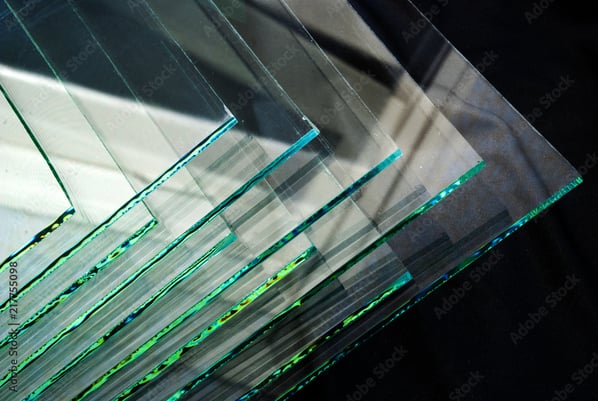
Annealed Glass
- Standard heat-treated glass with natural cooling process
- Suitable for most interior applications where building codes don’t require tempered glass
- Slightly narrower thickness tolerance range
- Often specified for interior partitions and walls

Tempered Glass
- Heat-strengthened for enhanced safety performance
- Required for doors and high-traffic areas
- Breaks into small, relatively harmless pieces if impacted
- Mandatory for applications subject to building code safety requirements
Not sure which specification your project requires?
Our technical team can help. We'll navigate building codes and application requirements with you. Code compliance ensured. Optimal performance delivered.
Key Tolerance Considerations for Channel Systems
Proper channel specification is critical for DGA acoustic glass installation success.
Here's why: laminated acoustic glass involves bonding multiple lites together with an interlayer. This process creates thickness tolerances that differ from monolithic glass products.
Key Tolerance Guidelines
|
|
*If channel sizing is off, you can run into costly field issues.
Planning Your Installation
Work with Dillmeier’s engineering team during the design phase to verify channel compatibility with your selected DGA configuration. We'll help you avoid costly field modifications. We'll ensure your acoustic glass system performs as engineered.
Simple as that.
Healthcare Facilities
Patient privacy regulations demand effective sound control. Healing environments require it even more.
DGA acoustic glass creates quiet patient rooms, confidential consultation spaces, and HIPAA-compliant areas while maintaining visual connection and natural light.
Corporate Offices
Open office plans require acoustic solutions that don't compromise transparency or aesthetics. DGA delivers. Focus rooms. Confidential meeting spaces. Private offices that reduce noise distractions without closing off your workspace.
Educational Environments
Learning requires concentration. DGA acoustic glass provides sound-controlled classrooms, testing centers, music practice rooms, and administrative offices where speech privacy and noise reduction directly impact educational outcomes.
Hospitality & Retail
Create sophisticated dining experiences, exclusive retail environments, and premium guest accommodations where acoustic comfort elevates the customer experience.
FAQs About DGA Acoustic Glass
Acoustic glass is specifically engineered to reduce sound transmission between spaces.
Yes, all glass provides some level of sound dampening. But acoustic glass? It uses specialized interlayer materials and laminated construction to achieve measurably superior noise reduction. DGA's advanced interlayer system targets the frequencies most common in speech and ambient noise, which gives you meaningful improvement in sound control compared to standard glass.
STC (Sound Transmission Class) is the industry-standard metric for measuring how well a building material reduces sound transmission. The rating is calculated across frequencies from 125 to 4000 hertz—the range encompassing normal speech, music, and common environmental noise.
Higher STC numbers mean better sound-blocking performance:
- STC 38-40 (DGA range): Loud speech becomes a murmur. Excellent privacy for most commercial applications.
- STC 35-37: Normal speech is audible but not intelligible.
- STC 30-34: Normal speech is clearly heard. Minimal privacy.
DGA's STC ratings of 38-40 represent high-performance acoustic control suitable for healthcare privacy requirements, corporate confidential spaces, and any application where sound isolation is critical. Real performance with measurable results.
Selecting the optimal DGA configuration depends on several factors:
- Required STC Performance - Determine your acoustic goals based on building use, privacy requirements, and applicable codes
- Safety Requirements - Door applications and high-traffic areas require tempered glass; check local building codes
- Structural Considerations - Verify that your glazing system can accommodate the thickness tolerance ranges
- Budget Parameters - Balance acoustic performance requirements with project economics
Dillmeier’s technical team can help you navigate these decisions. We'll review your architectural plans, discuss performance objectives, and recommend the DGA configuration that meets all of your requirements—acoustic, safety, and budgetary.
Laminated glass, like DGA, has thickness tolerances that differ from single-pane glass due to the lamination process. The specifications table shows both minimum and maximum thickness for each DGA configuration; these ranges are wider than standard glass tolerances.
Critical Considerations
- Glazing channels must accommodate the maximum thickness dimension
- Setting blocks and edge clearances should account for tolerance ranges
- Improper channel sizing can cause installation failures or compromised acoustic performance
- Pre-installation verification prevents costly field corrections
We recommend involving Dillmeier’s engineering team during the design phase to verify compatibility with your glazing system and avoid specification errors.
Yes. While our standard DGA configurations cover most commercial applications, we fabricate custom laminated acoustic glass for projects with specific requirements. Custom configurations may include:
- Non-standard dimensions or shapes
- Alternative glass thicknesses or compositions
- Specific interlayer thickness requirements
- Integration with other glass performance features
Contact our team to discuss your project's unique requirements. We'll work with you to develop a custom DGA solution that meets your acoustic performance goals.