
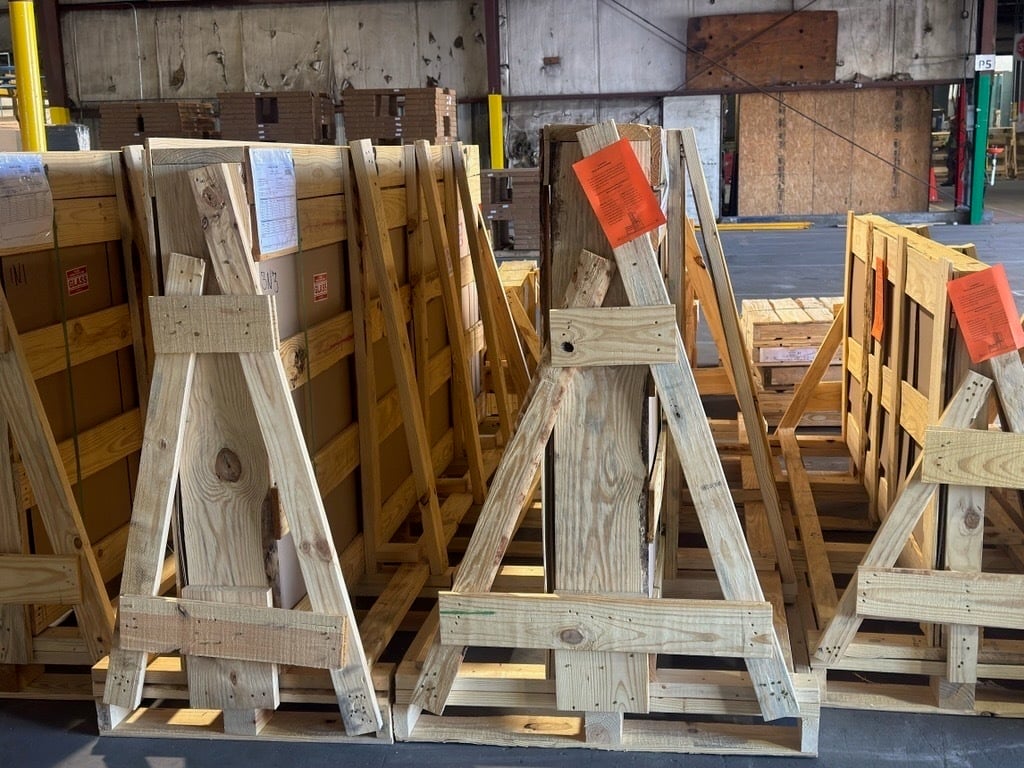
How Dillmeier's glass crating process keeps every order clean, on schedule, and unbroken.
A crate rarely gets much attention on a glass quote, but when a shipment arrives damaged, packaging quality, or lack thereof, becomes hard to ignore.
Indeed, damaged panels force crews to wait for replacements, but even intact glass can hold up a job if it needs cleaning or gets unpacked out of sequence.
To help prevent those delays, Dillmeier runs a dedicated crating department, and we build every order, large or small, into a crate sized and reinforced for that specific shipment. If you're the one who has to check glass off a punch list and move on to everything else you’re responsible for, this is the part of the order you shouldn't have to worry about.
Here's why glass crating matters so much to the people who have to make sure the glass shows up ready to install.
Key Takeaways
- Dillmeier's glass crating process treats every order individually, never packed to a generic template.
- Custom crating keeps glass clean and free of handling residue that can occur during transit.
- With Dillmeier, your crates can be opened on your installation schedule, not a rigid freight schedule.
- Extra foam reinforcement and marked panels provide glass shipping damage protection for bonded and specialty units.
- A crate built for the shipment is a direct contributor to Dillmeier's 1.01% replacement rate.
Reason 1: Glass Crating Keeps Your Products Clean
Glass passes through plenty of hands and a lot of different environments between the fabrication floor and your job site: trucks, docks, warehouses, and sometimes it spends weeks stuck in transit. A crate does more than absorb impact, though. It seals the glass off from dust, grime, and handling residue until your crew is ready to open it.
That’s a bigger deal than it sounds.
Glass that arrives dirty from transit either needs a cleaning pass on site before it goes in, or it goes in with smudges and dust showing up on a finished wall, railing, or display case.
For a multi-location rollout, that's the difference between every store opening looking immaculate and one location's glass looking like it came from a different, rushed order. That kind of inconsistency is easy to miss from a spreadsheet and nearly impossible to miss when you're on the sales floor, which is exactly where it gets noticed first.
Reason 2: It ships on Your Time, Not the Truck's
Glass installation delays rarely start with the glass itself; rather, they begin with a crate that gets opened at the wrong time, in the wrong order, or before the crew is truly ready for it. Dillmeier builds each custom glass crate so the glass can sit, if the job requires it, and still come out ready to install whenever you need it.
In other words:
- Crates are sized and labeled for the shipment they're protecting, not a standard size
- Panels on bonded and specialty units are often marked to show your crew which side to open first
- Job-site delivery is scheduled around your installation timeline, so you’re not stuck with an inflexible freight window
Those markings help installers avoid unnecessary handling when unpacking the glass. It means installers aren't lifting a full panel out of the crate and turning it around on site just to find the correct side, which matters most on bonded or oversized units where an extra turn is exactly the kind of handling a crate is built to prevent.
The flexibility to deliver directly to the job site becomes especially useful when schedules change.
Imagine your glass gets ordered late, another trade runs behind, and then what was supposed to ship to your shop now has to go straight to the job site instead. As a result, there's no shop table to double-check anything against in that scenario; the crew has no choice but to open the crate on site and install what's inside. A crate sized and reinforced for the shipment helps protect the glass through that change in plans, so it arrives ready to install.
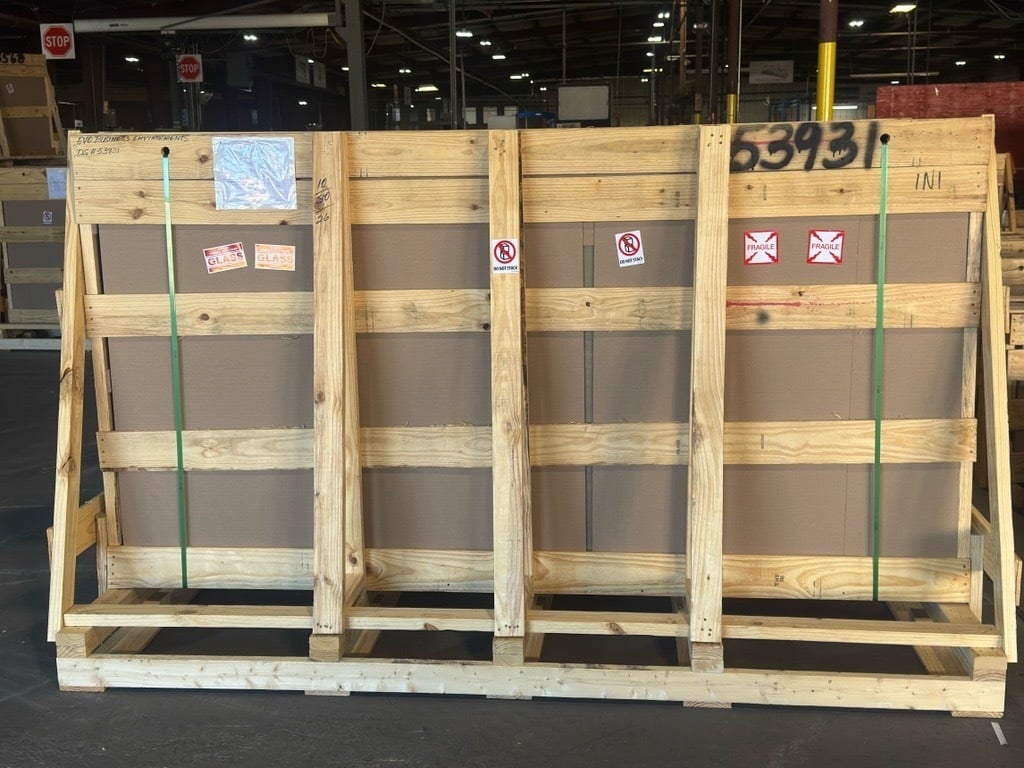
Reason 3: Glass Arrives Without Breaking
A broken pane stalls installation, requires a replacement, and leaves the crew waiting for another delivery.
Dillmeier's crating department builds every crate to the piece it's shipping, not a stock size.
That means:
- Foam reinforcement matches the glass piece, with extra foam added for bonded units
- Crate dimensions are built to the order, never a standard SKU
- You benefit from a dedicated team that builds glass crates and nothing else, separate from the fabrication floor
Bonded units add one more variable: the adhesive joint has to hold through the ride, rather than just survive the shop floor. The extra foam on those units is built around protecting that joint specifically, in its entirety.
That's glass shipping damage protection built into fabrication and crating from day one, and a direct contributor to Dillmeier's 1.01% replacement rate and 99% on-time delivery on orders shipped nationwide, direct to store or job site.
Send us your drawings, quantities, or shipping requirements, and our team will scope the fabrication and glass crating plan for your project, including delivery straight to a job site if that's what the schedule calls for. Contact Dillmeier today.
Frequently Asked Questions
Why is glass crated for shipping?
Glass crating exists because glass is fragile and easily damaged by handling, vibration, and impact during transport. A properly built crate holds the glass rigid, cushions it against shock, and keeps it clean, from the fabrication floor to your job site. Without that protection, even careful handling at a dock or job site can chip an edge or crack a pane that looked fine when it left the shop.
How does Dillmeier prevent glass breakage during shipping?
Glass shipping damage protection starts with Dillmeier's dedicated crating department, where crates are built to the specific piece being shipped rather than pulled from a standard size. Bonded and specialty units get extra foam reinforcement, which is part of why Dillmeier's replacement rate sits at 1.01%.
What is a custom glass crate?
A custom glass crate is built to the exact dimensions and handling needs of a specific order, rather than a generic box or pallet. That includes sizing the crate to the piece, adding foam reinforcement where needed, and marking panels to show installers which side to open. The difference shows up most on odd-sized or bonded pieces, where a generic box would leave gaps that let the glass shift in transit.
What happens if my glass needs to ship straight to a job site instead of a shop?
Dillmeier can drop-ship crated glass directly to a job site when a project's schedule requires it. Because the crate is built for that specific shipment, the same protection and panel-marking apply whether delivery goes to your shop or straight to the site. This comes up most often on schedule-driven jobs where a shop stop would just add another handoff, and Dillmeier's logistics team works directly with your site contact to time it and avoid a glass installation delay.
Does a glass crate need to be opened right away?
Not necessarily. Crates are built to hold up to normal job-site conditions, and panels are often marked to show which side to open first, so your crew isn't guessing when it's time to unpack. On jobs where timing depends on other trades finishing first, that protection means the crate doesn't have to be opened the moment it arrives. The goal is that your installation timeline decides when the crate comes open, not the delivery truck's.