How Fluted Glass Translates to Commercial Design
If you've scrolled through a design blog or renovation show lately, there's a good chance you've spotted it: glass with soft, grooves running through it, catching light in a way flat glass never could. House Beautiful recently named fluted glass one of 2026's breakout interior trends, pointing to its use in kitchen cabinetry, shower screens, and statement room dividers.
Designer Joelle Kutner told the outlet she reaches for it because it "introduces depth and texture without overwhelming the space."
Other designers pointed to similar reasons for opting for fluted glass, such as swapping it into pendant lighting for a softer, more diffused glow, or using it in place of solid cabinet doors to add movement and visual interest without putting everything on a shelf on full display.
That balance—visual interest without visual clutter—is exactly why the same glass has quietly been a staple of commercial architecture for decades.
To be sure, this type of decorative glass can create separation without making an office, healthcare facility, retail environment or hospitality space feel completely closed off.
Bringing the look into a commercial project involves more than choosing a pattern, however, as panel dimensions, glass composition, safety requirements, fabrication and installation all affect how the finished application performs.
Key Takeaways
- Fluted glass is trending in home design right now, but reeded and ribbed glass have been used in commercial buildings for years.
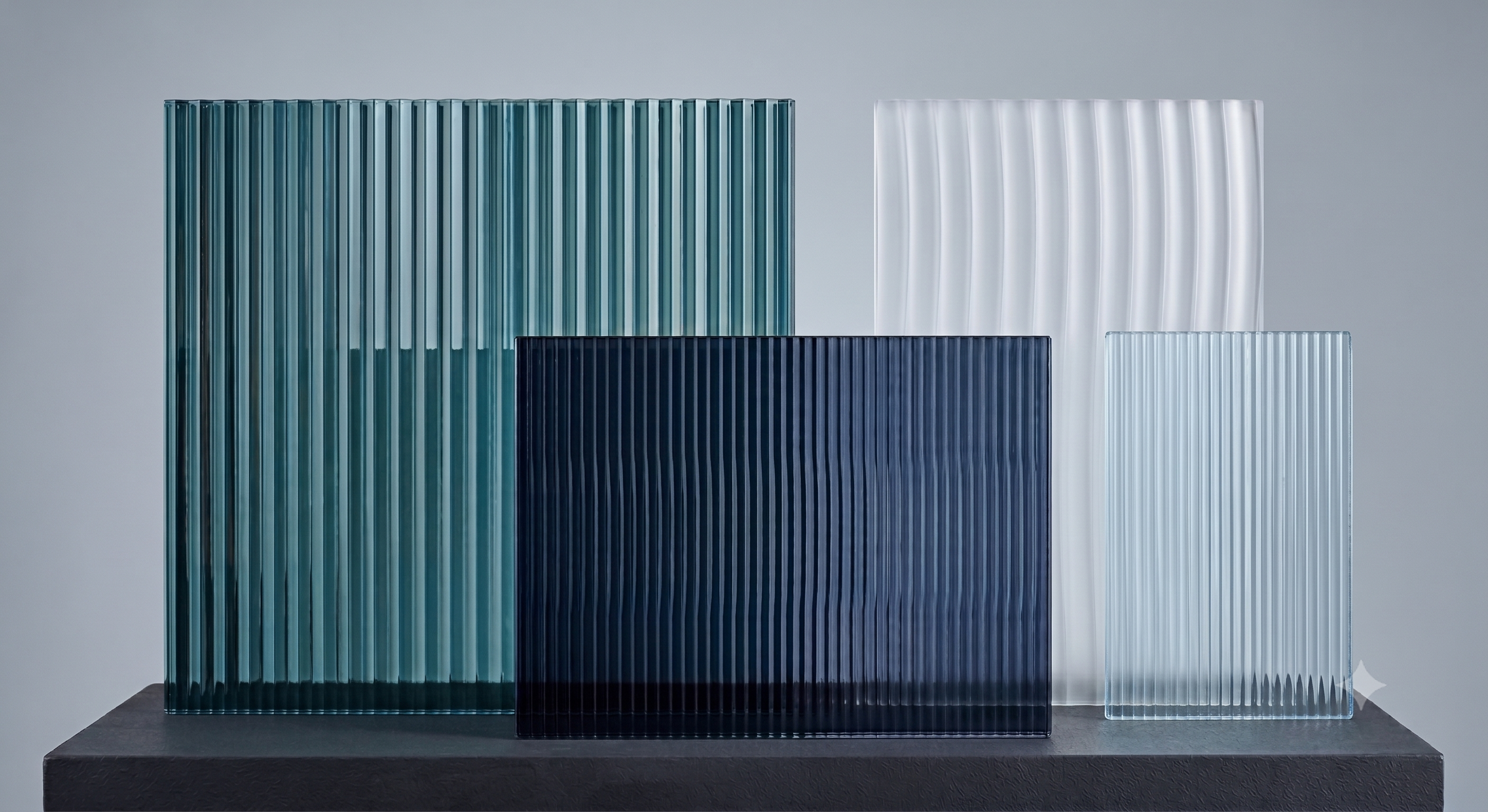
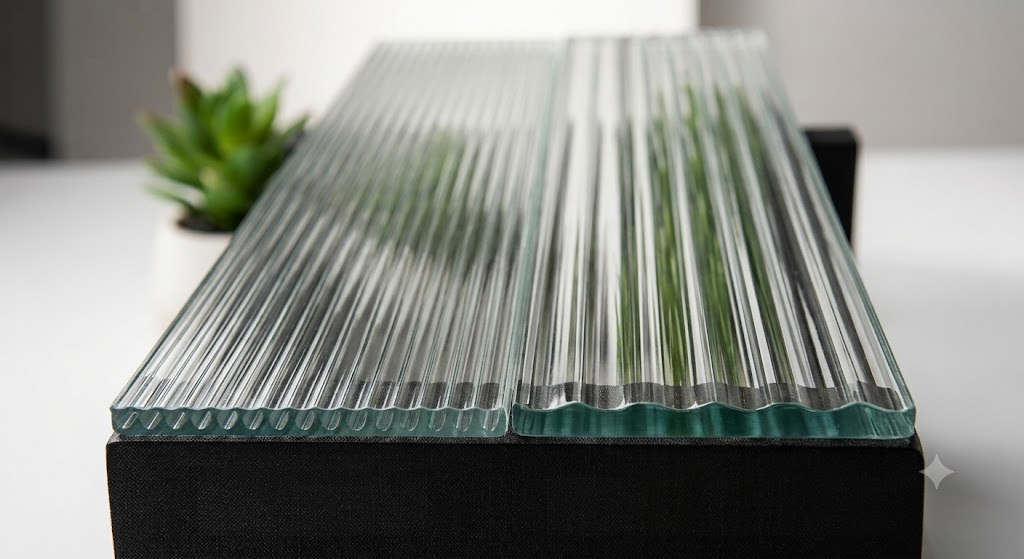
- "Reeded" and "ribbed" (or "fluted") glass are technically different—one has a concave, hollowed-out texture, the other a convex, curved-outward one—but are terms used mostly interchangeably across the glass manufacturing and design industries.
- Commercial applications span retail displays, healthcare privacy partitions, and corporate office walls and doors.
- This decorative glass is available in 1/4-inch to 3/8-inch lite thicknesses and goes through a tempering process for strength and safety.
- Pairing reeded or ribbed glass with wood or aluminum framing is a common way to customize the look for a specific brand or space.
The Fluted Glass Trend & Where It Came From
Design coverage of the fluted glass trend tends to frame it as a revival rather than something new, tracing the look back over a century to Art Deco storefronts and early to mid-20th-century architecture.
That history matters here, because commercial buildings never really stopped using it. Reeded or fluted glass has had a steady presence in modular walls, doors, and partitions well before the current wave of attention.
Much of the design coverage frames the trend as part of a broader shift away from glossy, uniform surfaces toward more tactile, textured materials. That shift points to the same core appeal driving commercial use all along: a way to let light into a space without giving up privacy, in a single material.
Commercial Applications for Reeded & Ribbed Glass
The trend that House Beautiful is covering lives mostly in kitchens and bathrooms. In commercial buildings, the same glass shows up across a wider range of applications.
Retail & Hospitality Spaces
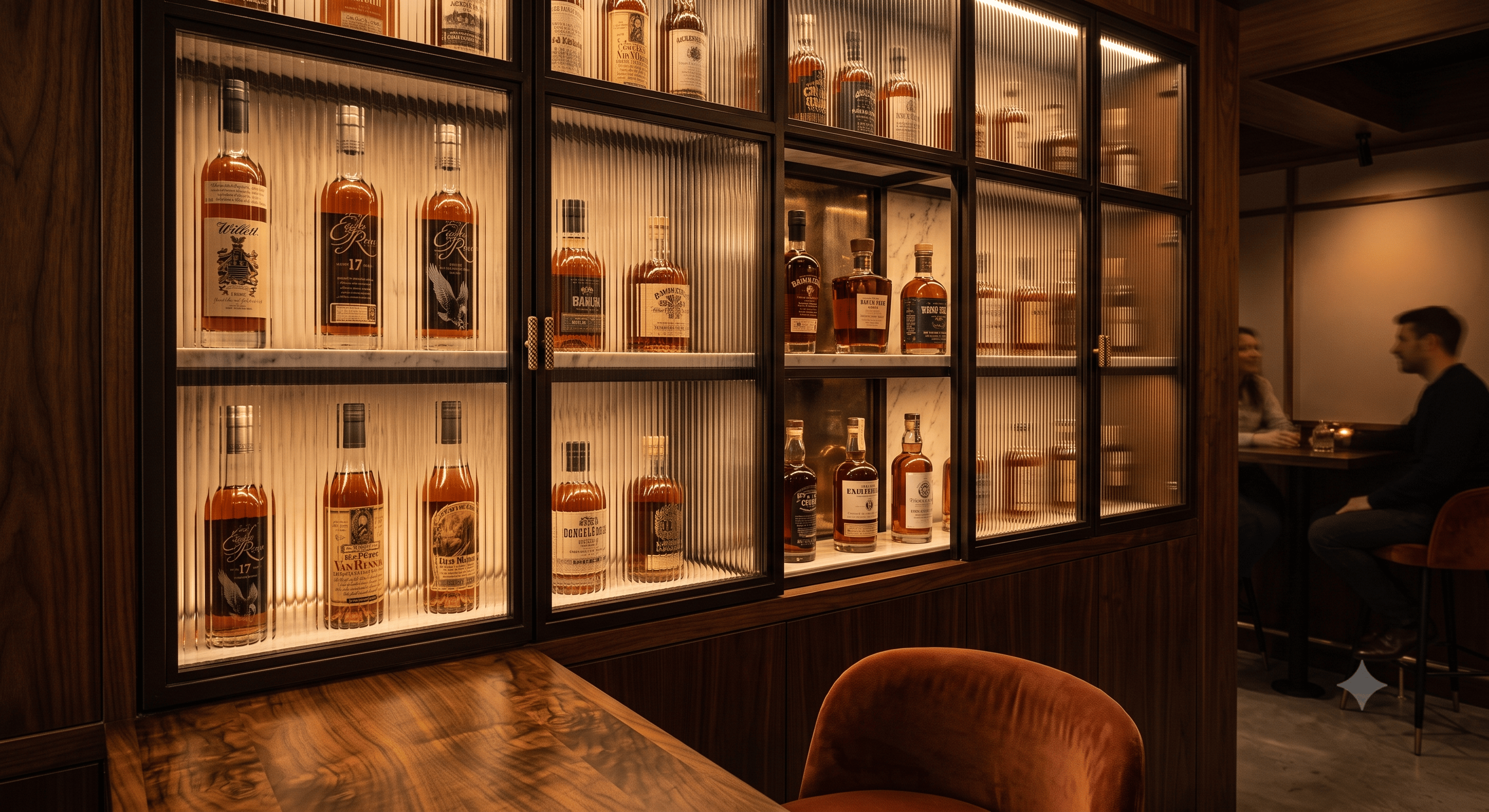
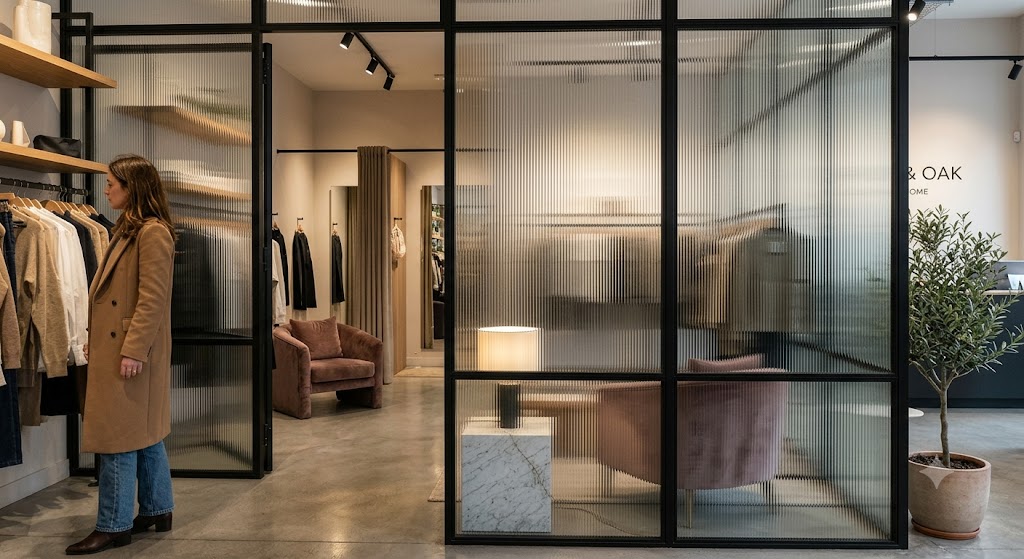
Retailers, restaurants, hotels and other hospitality environments can use fluted or reeded glass in dividers, display elements, shelving, bars and decorative walls.
In these settings, this decorative glass acts as a versatile design element for display cases and shelving. Whether in a high-end jewelry counter or an apparel display, the material adds visual texture to display cases and shelving while still allowing merchandise to remain visible.
Beyond display features, it has become a staple for bar and lounge partitions. It allows restaurants and hotels to define distinct seating areas without sacrificing the open feel of the room. By simply adjusting the framing or finish, the same glass can be adapted to suit a wide variety of aesthetics—from the sleek lines of a luxury boutique to the warmer tones of a local cafe.
Healthcare Environments
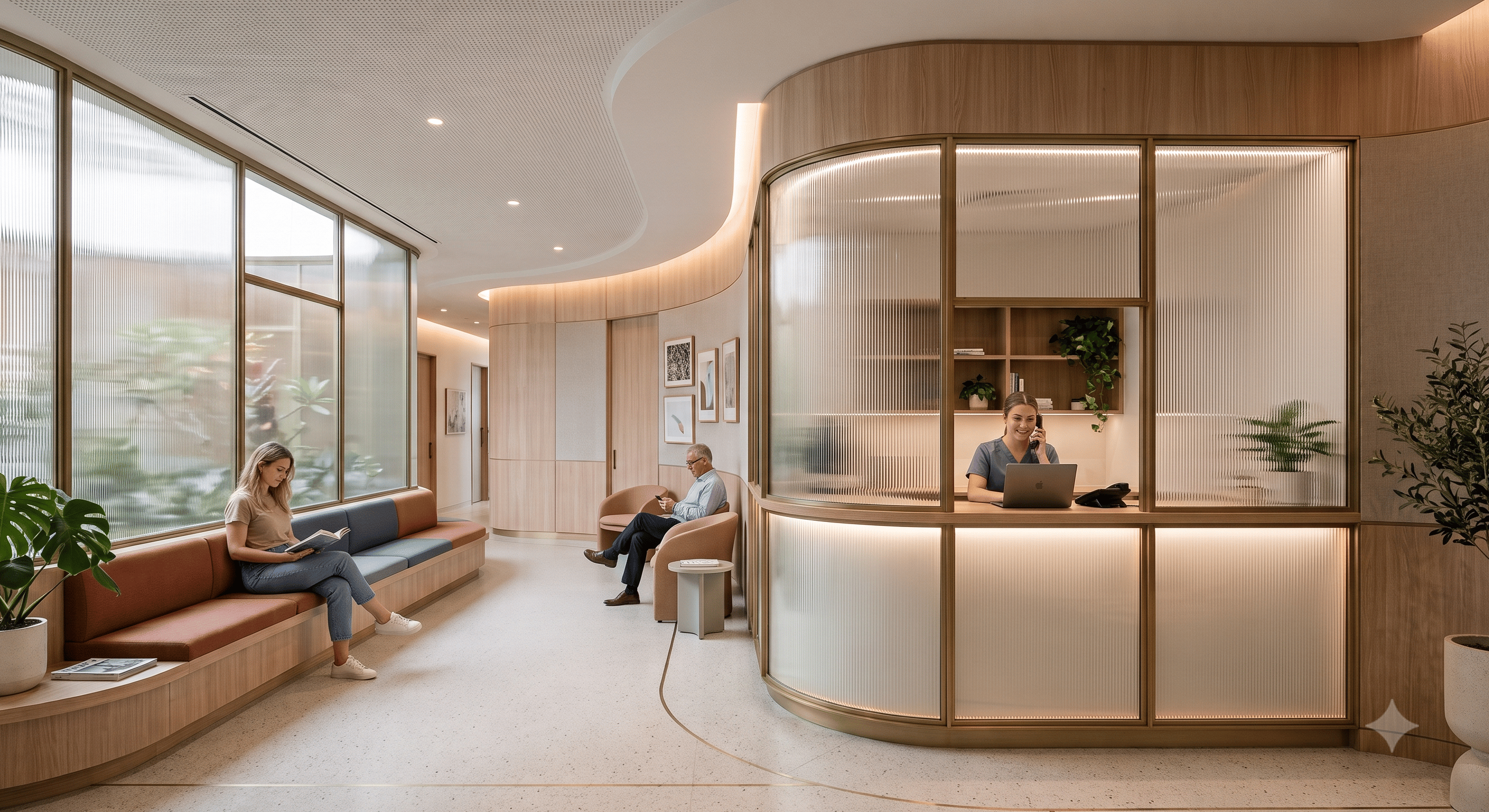
Reeded or fluted glass helps hospitals and medical offices balance two competing needs: patient privacy and open, welcoming spaces. Waiting areas, reception points and other shared healthcare spaces may use textured glass to soften direct views while allowing light to move through the interior.
It also shows up in exam rooms and reception area partitions, where full opacity would feel institutional, yet a clear pane wouldn't offer enough discretion. The texture successfully softens the clinical feel of these environments while keeping conversations at the front desk private.

Offices & Conference Rooms
As more companies rethink their floor plans, reeded and fluted glass have become a go-to for modular office walls, conference rooms, and lobby partitions. It lets natural light travel between spaces while still giving individual offices and meeting rooms a sense of enclosure—useful in layouts where a fully open plan isn't practical, but floor-to-ceiling solid walls would feel too closed off.
The Practical Benefits Behind the Look
None of this would matter for a commercial project if the material were purely decorative. Fluted and reeded glass earn their place in specs for a few concrete reasons:
- Privacy without full opacity. The textured surface obscures a clear view while still letting light pass through, which is why it works so well in healthcare and office settings.
- Durability. Reeded glass goes through a multi-step tempering process, treated in special ovens to meet ASTM International standards, making it far stronger than untreated, annealed glass.
- Clean installation. A drill-free clamping system means partitions and dividers can be installed without leaving holes, marks, or scratches behind.
- Design flexibility. Reeded and ribbed glass pair well with materials like wood and aluminum framing, giving architects and designers room to match a specific brand or interior aesthetic. A matte black aluminum frame tends to produce the sleek, modern look driving much of today's residential fluted glass trend, while a wood frame reads warmer—a common choice for hospitality settings and wellness-focused office spaces.
From Residential Trend to Commercial Specification
The renewed interest in fluted and reeded glass reflects something commercial designers have understood for years: Glass does not have to be perfectly flat and transparent to keep a space feeling bright and connected.
This decorative glass can add movement, visual screening and material character to offices, healthcare facilities, retail environments and hospitality spaces. Translating that effect successfully requires the right pattern, glass composition, fabrication details, and installation system.
Since 1933, Dillmeier Glass Company has fabricated glass for architects, designers, and procurement teams across retail, healthcare, and corporate office projects. As the reeded and ribbed look gains popularity in commercial design, prioritizing long-term durability is essential—a textured glass panel in a high-traffic area like a hospital corridor or retail space must be built to perform for years, not just look good on day one.
Whether you're specifying glass for a new build or sourcing it for a project already underway, reach out to Dillmeier Glass Company to talk through what reeded or ribbed glass could look like in your space.
FAQs
Is fluted glass the same as reeded glass?
Not exactly. "Fluted" is often used as an umbrella term in design coverage, but Dillmeier Glass Company draws a more precise distinction: Reeded glass has a concave, hollowed-out texture, while ribbed or fluted glass has a convex, curved-outward profile. Both diffuse light and provide privacy in similar ways
Is reeded glass good for privacy?
Yes, its textured surface obscures a clear view while still letting natural light through, which is why it's common in healthcare exam rooms, office partitions, and retail displays.
What thickness does reeded glass come in?
Standard reeded glass lites range from 1/4-inch to 3/8-inch, depending on the application.
Is reeded glass tempered?
Yes, reeded glass fabricated by Dillmeier Glass Company goes through a multi-step tempering process in accordance with ASTM International standards, making it significantly stronger than untreated, annealed glass.
What materials pair well with reeded or ribbed glass?
Wood and aluminum framing are both common pairings, letting architects and designers customize the look for a specific brand or space.